Succession Law

Our Succession Law Practice advises individuals, families and fiduciaries on the full spectrum of succession matters under Maltese law, including will drafting, estate planning, probate, intestate succession and succession disputes. We act for both Maltese nationals and foreign clients, particularly where estates involve immovable property in Malta or cross-border inheritance issues.
With a significant Maltese diaspora resident in jurisdictions such as the United States, Canada, the United Kingdom and Australia, succession matters frequently involve competing legal systems, foreign wills and differing inheritance expectations. Maltese succession law, primarily governed by the Maltese Civil Code, applies mandatorily in key respects and often produces outcomes that differ materially from common law inheritance regimes. Our role is to help clients navigate these rules with clarity, foresight and legal certainty.


Our Succession Law Expertise
Succession law in Malta governs the transfer of assets on death and operates at the intersection of domestic inheritance rules and European private international law. Depending on the circumstances, succession may take place through testamentary succession, intestate succession, or carefully structured planning arrangements such as trusts and other private-client tools.
Our practice combines in-depth knowledge of Maltese succession law with extensive experience advising on cross-border estates under Regulation (EU) No 650/2012 (the EU Succession Regulation). This enables us to support clients at every stage of the succession lifecycle — from proactive estate planning, to estate administration, to the resolution of complex inheritance disputes.
We regularly advise high-net-worth individuals, families with international connections, expatriates resident in Malta, and non-residents with assets situated in Malta.
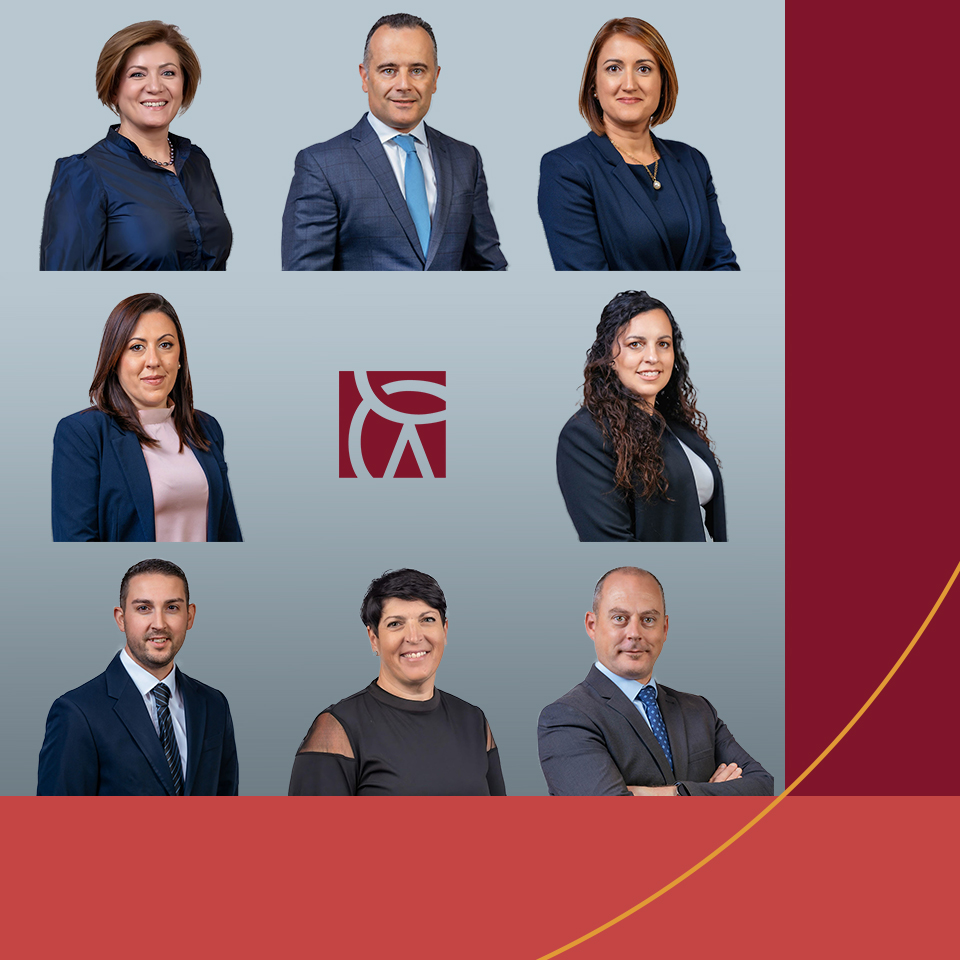
“Succession planning in Malta is not about simply drafting a will. It requires an understanding of mandatory heirship rules, property location and the interaction between Maltese law and foreign succession systems.” Dr Charlene Mifsud, Partner
Succession Law and Immovable Property in Malta
Succession involving immovable property situated in Malta must be analysed in light of the EU Succession Regulation, which applies to successions with cross-border elements for deaths occurring on or after 17 August 2015.
As a general rule, the Regulation provides that a single law governs the succession as a whole, including immovable property, based primarily on the deceased’s habitual residence at the time of death. This represents a departure from the traditional lex situs approach and has significant implications for both Maltese residents and foreign property owners.
Where Maltese law is the applicable law — whether by habitual residence or by a valid choice of law — Maltese succession rules, including mandatory heirship provisions, may apply to Maltese immovable property and, in certain cases, to assets located abroad. Conversely, where a foreign law applies to the succession, Maltese courts will generally give effect to that law, subject to limited public policy and mandatory rule exceptions.
Because foreign wills and foreign succession regimes may not always operate as intended in respect of Maltese assets, it is often advisable for property owners to obtain Maltese succession advice and, where appropriate, to regulate Maltese assets through a carefully coordinated Maltese-law will or succession structure.
Wills Under Maltese Succession Law
A will takes effect upon death and may dispose of assets by universal or singular title. Maltese law recognises several forms of wills, most commonly public wills and secret wills, each subject to strict formal requirements laid down in the Civil Code.
Maltese law recognises testamentary freedom, but this freedom is not absolute. Where Maltese law governs the succession, it imposes forced heirship rules designed to protect close family members, including descendants and the surviving spouse. These mandatory entitlements reserve a portion of the estate in favour of protected heirs and may override dispositions that conflict with statutory rights.
In a cross-border context, the effectiveness of a Maltese will depends not only on its formal validity, but also on the law applicable to the succession under the EU Succession Regulation, including any valid choice of law in favour of the law of nationality. Our lawyers advise clients on:
- whether a Maltese will is appropriate in light of their nationality, residence and asset profile;
- coordinating Maltese wills with foreign wills and estate plans;
- ensuring compliance with Maltese forced heirship rules where applicable; and
- structuring wills to achieve clarity, enforceability and alignment with broader family objectives.
Intestate Succession Under Maltese Law
Where no valid will exists, or where a will does not dispose of the entire estate, succession occurs by operation of law. Where Maltese law is the applicable law, intestate succession follows a statutory order of heirs, prioritising descendants and the surviving spouse, followed by ascendants and collateral relatives.
Intestate succession frequently produces outcomes that differ significantly from personal expectations, particularly in blended families, international households, or where substantial assets are involved. In cross-border cases, intestacy can also trigger parallel proceedings and uncertainty as to jurisdiction and applicable law.
We assist heirs and estate administrators in navigating Maltese intestate succession rules, asserting inheritance rights, and managing estate administration efficiently, including in cases involving non-resident heirs and assets located in multiple jurisdictions.
Succession Planning Through Trusts
In addition to wills, trusts may form part of an effective succession and wealth-planning strategy under the Malta Trusts and Trustees Act. While trusts do not replace succession law, they may offer valuable advantages in appropriate cases, including continuity of ownership, asset protection, and structured governance across generations.
Our practice advises on the use of Maltese and foreign trusts in a succession context, working closely with licensed trustees, family offices and tax advisers to ensure that trust structures are properly integrated with applicable succession rules, forced heirship considerations, and cross-border estate planning objectives.
Our Approach to Succession Matters
We approach succession law with a strategic and preventative mindset. Our focus is on identifying legal and practical risks at an early stage, aligning succession structures with family and commercial objectives, and ensuring that outcomes are robust under both Maltese law and the EU Succession Regulation.
Given the international nature of many estates, we regularly coordinate with foreign lawyers, notaries, trustees and professional advisers to deliver seamless cross-border succession planning and estate administration.
How Our Succession Lawyers Can Help You
Our Succession Law Practice assists clients with:
- drafting and reviewing Maltese-law wills;
- cross-border succession and estate planning under the EU Succession Regulation;
- succession involving Maltese immovable property;
- probate-free estate administration and inheritance formalities in Malta;
- intestate succession and heirship matters;
- representation of non-resident heirs through powers of attorney;
- assisting local and foreign heirs, including through powers of attorney, in formalising succession procedures in Malta following the inheritance of Maltese property;
- coordination of Maltese and foreign wills and estate plans; and
- succession disputes and contentious inheritance matters.
Get in Touch







Related Practice Groups

Related Practices
Related Opportunities
Plan or Administer a Succession in Malta